
A New Standard for Environmental Management in the Asian Market

In today's business world, environmental considerations are crucial for any company that wants to thrive in the Asian market. At Asia Gateway (AG), we're addressing this global trend by partnering with leading overseas companies that have advanced analytical technology. This collaboration allows us to offer new solutions that will take our clients' environmental strategies to the next level.

1. A Powerful Partnership Between Diverse Experts

We've formed a strategic partnership with a UK-based organization that specializes in climate-related data analysis. By combining their world-class technology for quantifying the business impact of climate change with our deep, long-standing knowledge of the Asian market, we can help our clients develop precise, data-driven strategies.

2. Supporting Management Strategies Aligned with International Standards

Through this collaboration, Asia Gateway (AG) provides advanced management advice that follows international frameworks for disclosing the financial impact of climate change. We offer strong support to companies across our network in Japan, Southeast Asia, and Mongolia, helping them clearly understand both the risks and opportunities of climate change so they can make future-focused decisions.

3. Creating Concrete Environmental Projects Through Bilateral Agreements

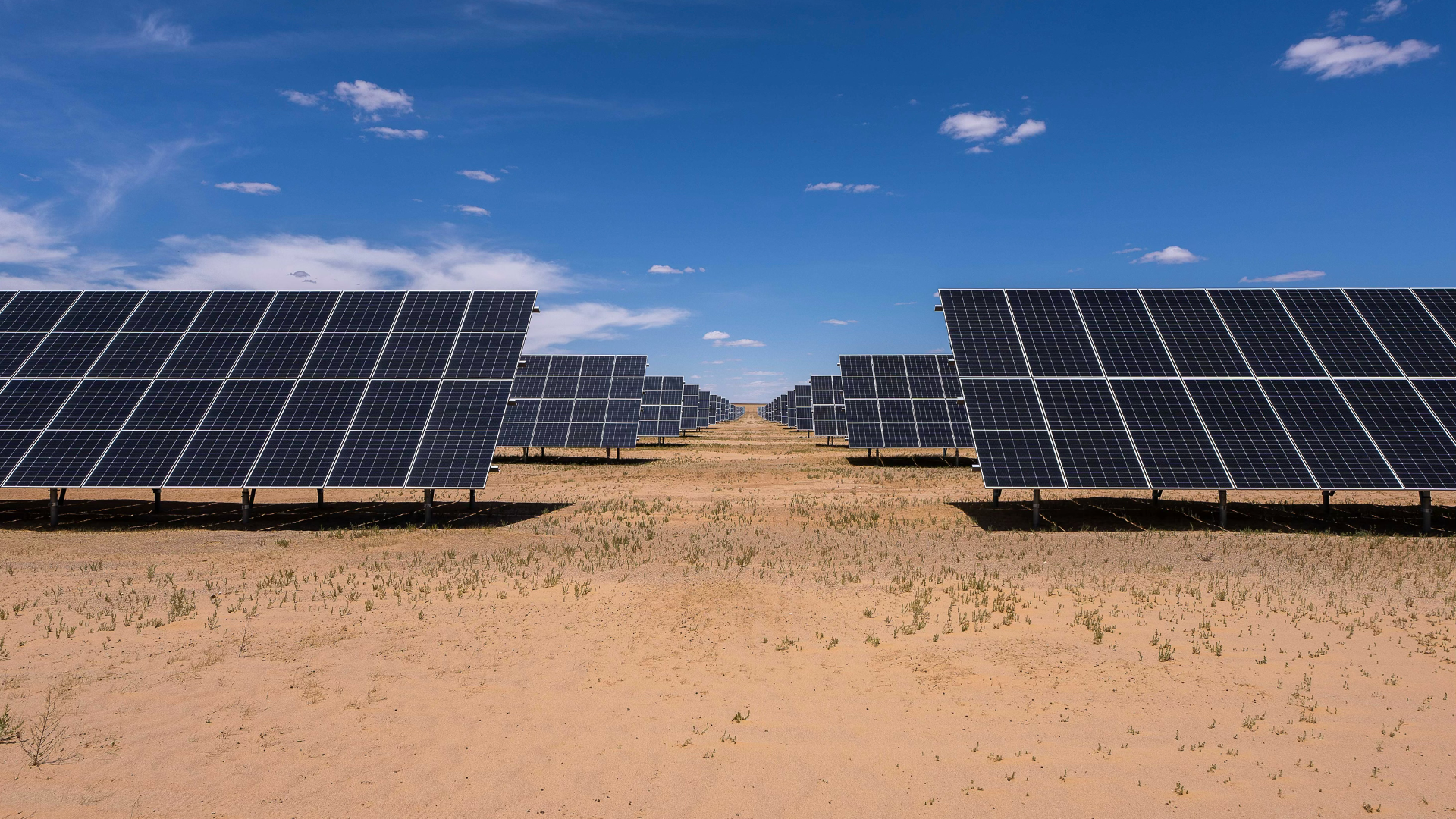
We don't just create strategies on paper. We are actively developing tangible environmental projects on the ground by leveraging bilateral frameworks promoted by the Japanese government. For example, we're working on renewable energy facilities in Mongolia and collaborating with a Japanese airline to improve energy efficiency. These are visible ways we're helping companies contribute to the environment.

Summary

For complex environmental issues, a great solution is for organizations with different specializations to work together across borders. As this case shows, by actively incorporating advanced outside expertise, companies can gain a competitive advantage in the Asian market and create significant value by contributing to a sustainable future.

This initiative is also featured as a case study on the Japan External Trade Organization (JETRO) website. You can find more details by clicking the link below:
https://www.jetro.go.jp/case_study/2023/asiangateway.html

By Tomonori Kimura • September 30, 2026
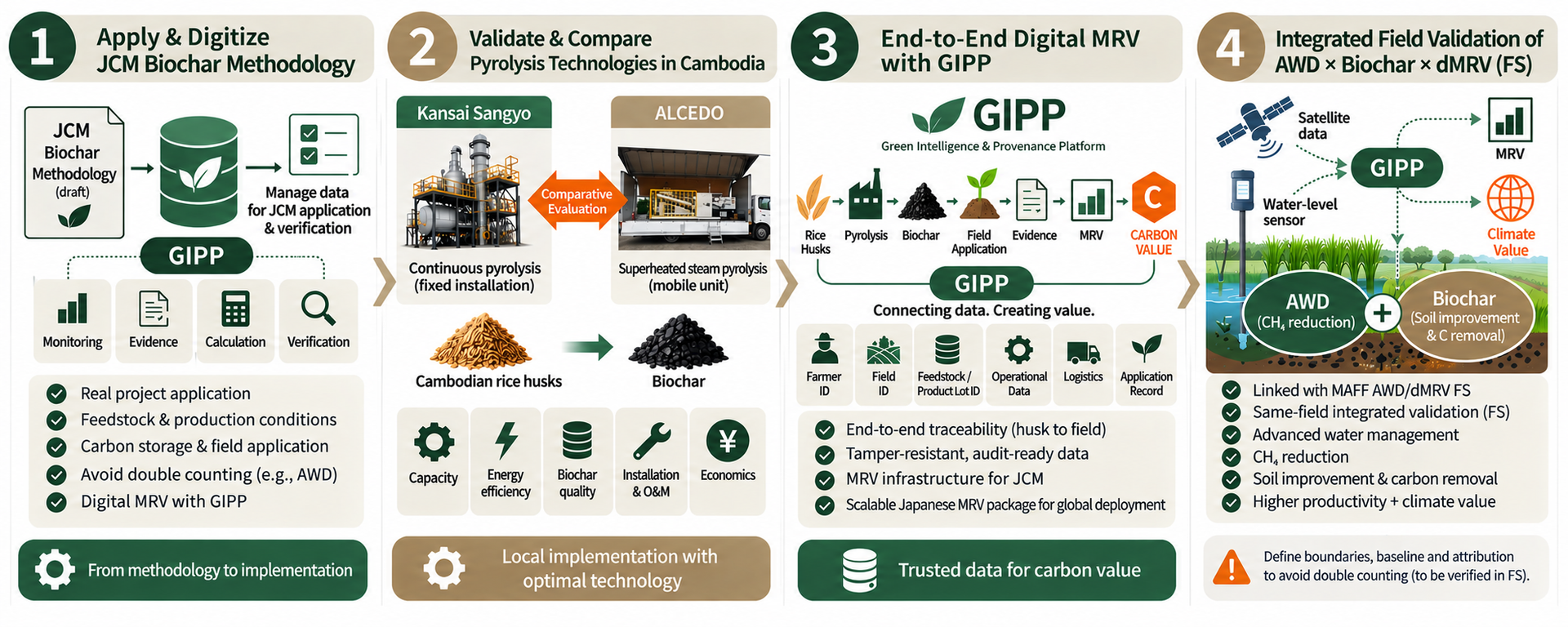
Asian Gateway Launches FS Toward JCM Implementation of Rice-Husk Biochar in Cambodia Selected for METI’s Global South Future-Oriented Co-Creation Program; Grant Approval Received — In collaboration with Nippon Koei, Kansai Sangyo and ALCEDO, exploring an integrated AWD, biochar and dMRV model — In Battambang Province, the project will assess rice-husk biochar production and field application, together with JCM MRV. In coordination with a MAFF-selected AWD/dMRV FS, Asian Gateway will explore an integrated “AWD × Biochar × dMRV” model in the same paddy fields, aiming to improve agricultural productivity, reduce GHG emissions, enhance carbon storage, and generate carbon credits under applicable schemes and methodologies. Asian Gateway Corporation (Head Office: Chiyoda-ku, Tokyo; Representative Director and President: Tomonori Kimura; “Asian Gateway”) announces that its proposed project, “Kingdom of Cambodia / Feasibility Study for the Production and Application of Rice-Husk Pyrolysis Biochar and Implementation of a JCM Biochar MRV Methodology,” was selected under the Ministry of Economy, Trade and Industry (METI) FY2025 Supplementary Budget Global South Future-Oriented Co-Creation Project Subsidy (Small-Scale Demonstration / Feasibility Study Program). The project was selected on June 30, 2026 and received grant approval on September 18, 2026. The project is a feasibility study (FS) in Battambang Province, Kingdom of Cambodia, to assess the commercial implementation potential of an integrated value chain that converts rice husks generated by rice milling into biochar through pyrolysis, applies the biochar to farmland, implements MRV (measurement, reporting and verification), and prepares for potential JCM crediting. The FS will examine feedstock supply, pyrolysis technology, biochar quality, agronomic effects, MRV methodology applicability, alignment with international standards, regulatory requirements and business viability, thereby identifying the technical, economic and institutional requirements for the next demonstration and commercialization phase. Four Implementation Themes
By Tomonori Kimura • September 30, 2026
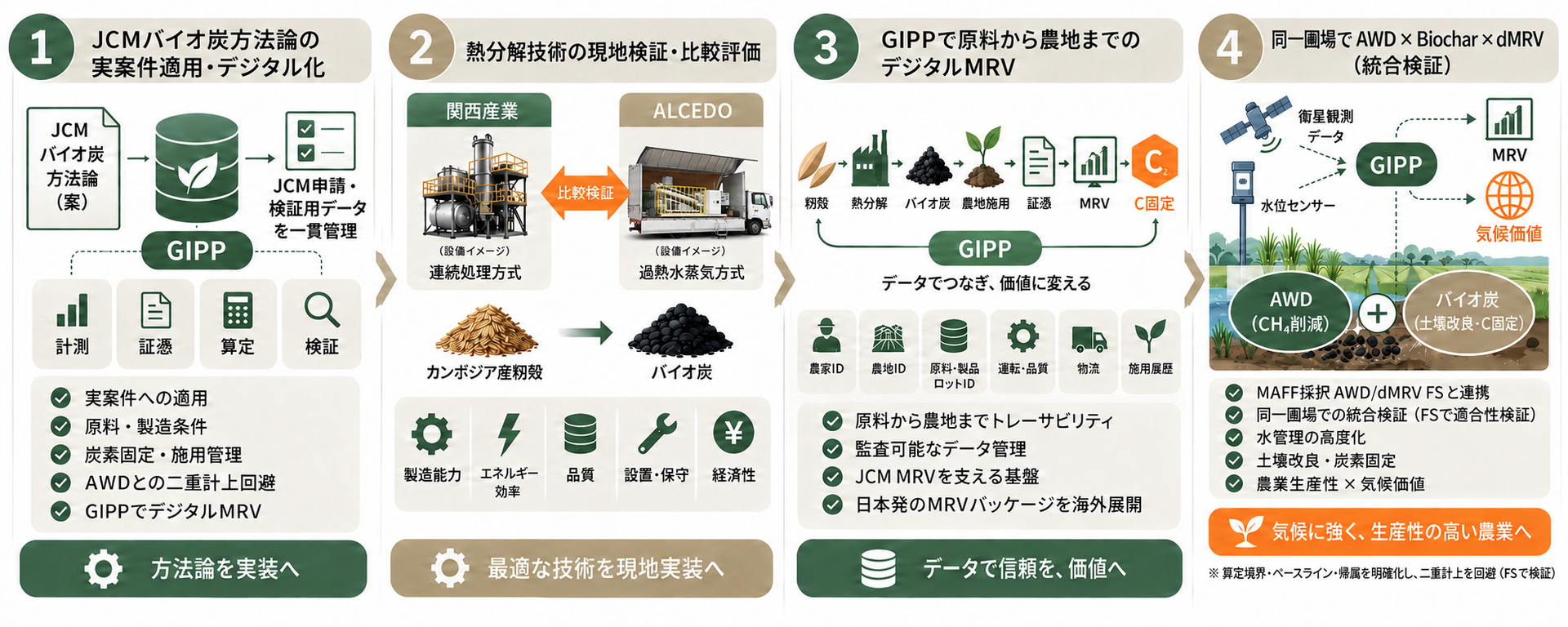
カンボジアで 籾殻バイオ炭のJCM実装化に向けたFSを開始 経済産業省「グローバルサウス未来志向型共創等事業」に採択・交付決定 ― 日本工営、関西産業、ALCEDOと連携し、AWD・バイオ炭・dMRVの統合モデルを検討 ― バッタンバン州で、籾殻由来バイオ炭の製造・農地施用・JCM MRVを検証。並行する農林水産省採択のAWD/dMRV FSと連携し、同一圃場での「AWD × Biochar × dMRV」による農業生産性向上、GHG削減・炭素固定、適用可能な制度・方法論に基づくカーボンクレジット創出を目指します。
August 10, 2026
Smart Solar and Asian Gateway Enter Business Partnership to Advance Decarbonized Infrastructure Development in Japan and Overseas — Integrating PV, BESS, and EMS/DERMS with GIPP to jointly develop decarbonized power infrastructure for grid-scale storage batteries, JCM partner countries, and AI data centers —