Smart Solar and Asian Gateway Enter Business Partnership to Advance Decarbonized Infrastructure Development in Japan and Overseas
— Integrating PV, BESS, and EMS/DERMS with GIPP to jointly develop decarbonized power infrastructure for grid-scale storage batteries, JCM partner countries, and AI data centers —
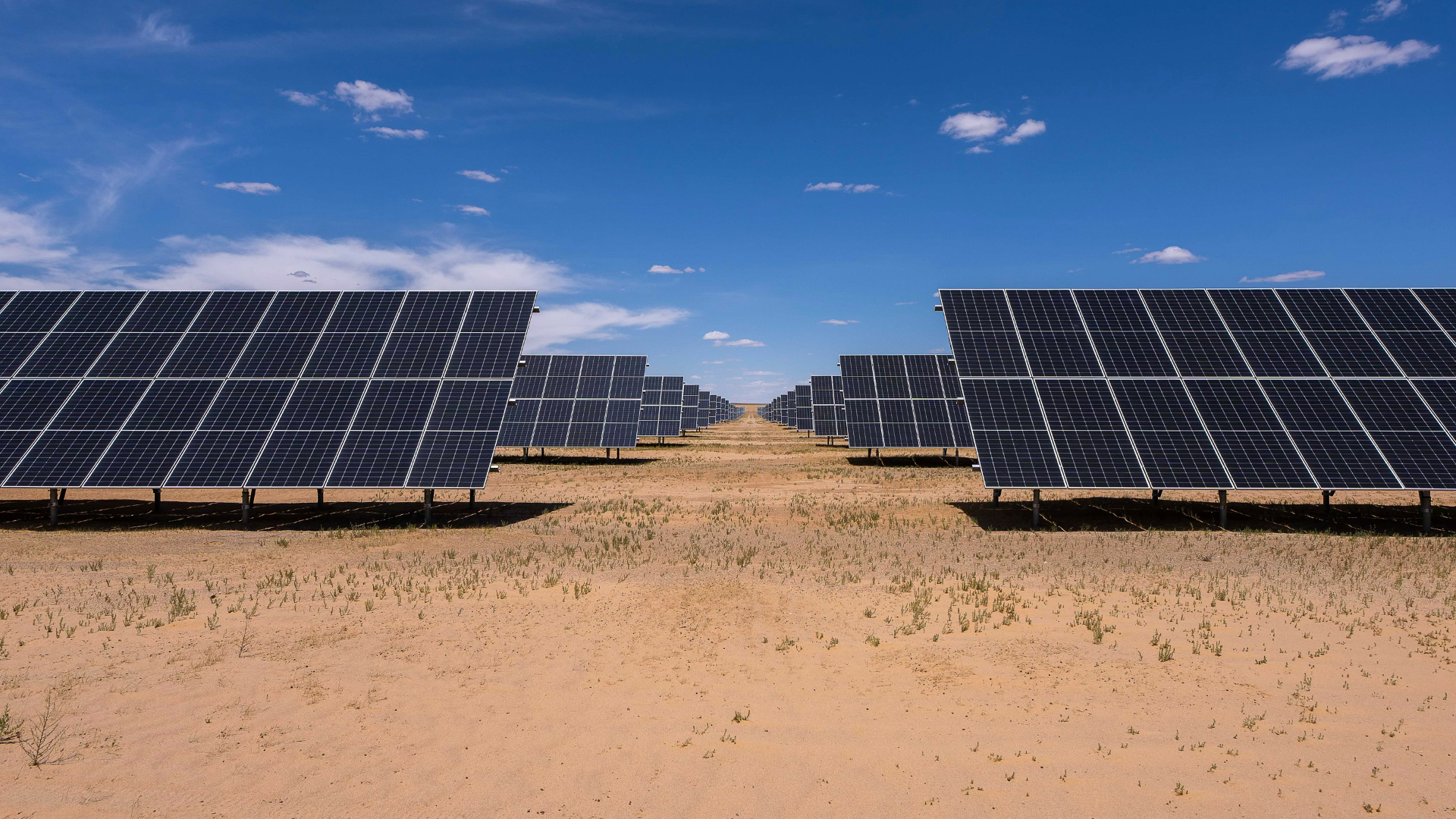
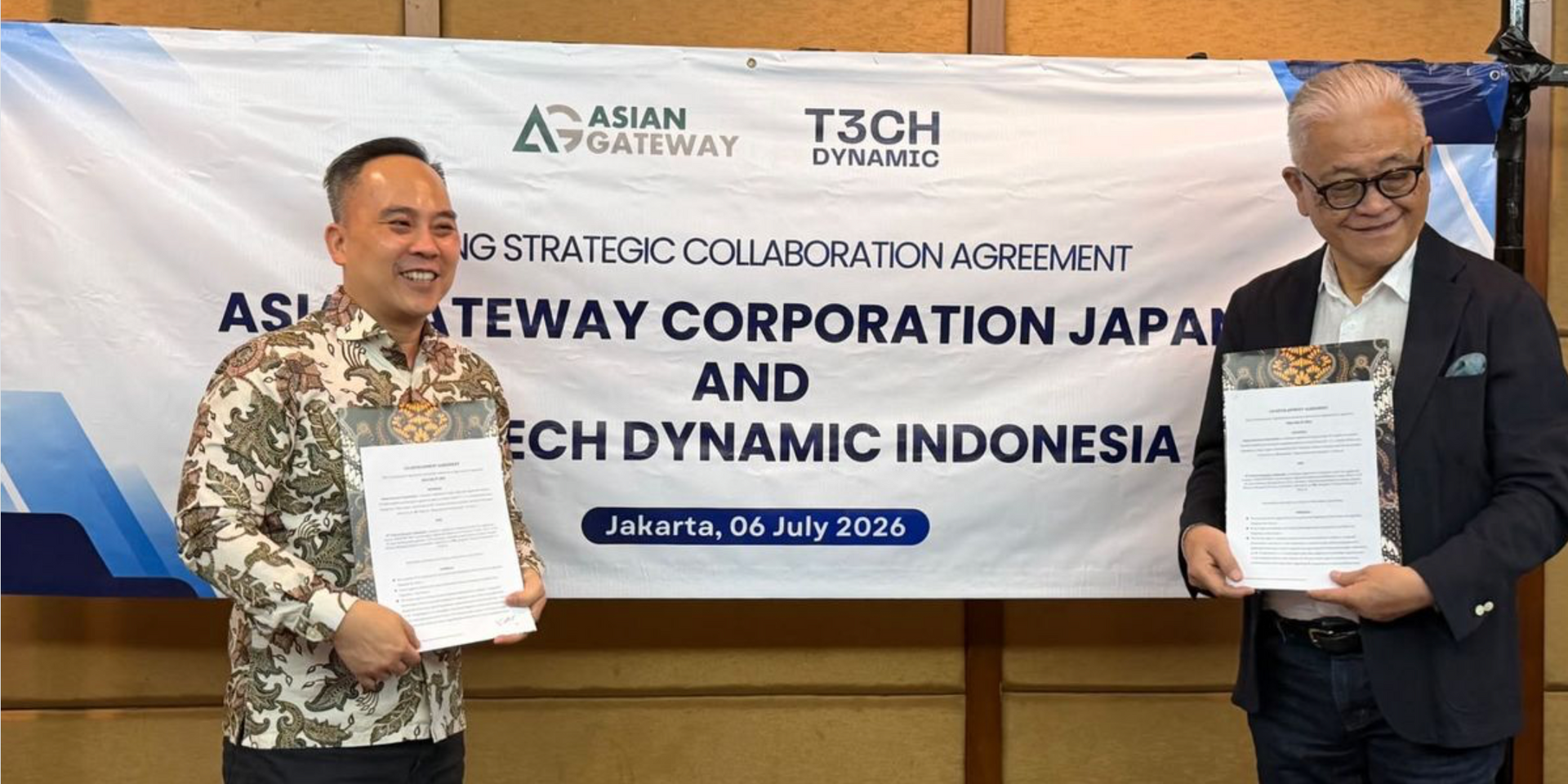
Smart Solar Co., Ltd. (headquarters: Kisarazu City, Chiba Prefecture; Representative Director: Hirofumi Tezuka; hereinafter "Smart Solar") and Asian Gateway Corporation (headquarters: Chiyoda-ku, Tokyo; Representative Director: Tomonori Kimura; hereinafter "AG") have entered into a business partnership agreement to jointly pursue project development and deployment proposals in Japan and overseas markets. The partnership covers the solar power generation systems, battery energy storage systems (BESS), power conditioning systems (PCS), energy management systems (EMS), and distributed energy resource management systems (DERMS) developed and offered by Smart Solar, as well as future integration with green hydrogen and green ammonia-related systems. Through this partnership, the two companies will jointly advance project formation, deployment proposals, and business development support for next-generation decarbonized infrastructure both in Japan and abroad.
Background to the Partnership
As the adoption of renewable energy accelerates globally, there is a growing need for integrated energy systems that can stabilize power grids, balance electricity supply and demand through storage batteries, support corporate procurement of decarbonized electricity, meet rising power demand from data centers, and enable the production and use of green hydrogen and green ammonia.
In particular, AI data centers are expected to diversify beyond conventional large-scale, centralized hyperscale facilities toward locally distributed infrastructure tailored to individual countries, regions, companies, and applications. For these facilities, it will be essential to secure a stable, low-carbon power supply, provide battery-based backup, maximize the share of renewable energy, and visualize environmental value in a manner consistent with 24/7 Carbon-Free Energy (CFE).
In addition, the number of signed partner countries under the Joint Crediting Mechanism (JCM) has expanded to 32 as of April 2026, following the addition of Oman that same month. Viewing these market and institutional shifts as a business opportunity, the two companies aim, through this partnership, to expand into Japan, the 32 JCM partner countries, and other growth markets.
Strengths and Roles of the Two Companies
This partnership combines Smart Solar's technology and product lineup with AG's capabilities in environmental value, financial value, and international business development, with the aim of positioning renewable energy facilities not merely as power-generating equipment but as decarbonized infrastructure assets that generate both environmental and business value.
The principal roles of the two companies are as follows.
Smart Solar (hardware, control, and implementation capability): Leveraging its design and implementation capabilities in PV, BESS, PCS, and EMS/DERMS, together with its energy management technology and integrated equipment/control know-how, Smart Solar will be responsible for the hardware and control technology underpinning decarbonized power infrastructure. With an emphasis on the quality and reliability demanded in the Japanese market, Smart Solar will provide highly implementable solutions in the areas of grid-scale storage batteries, industrial self-consumption solar power, microgrids, and distributed energy resources.
AG (environmental value, financial value, and international development): Leveraging its capabilities in JCM, carbon credits, EACs, 24/7 CFE, digital MRV, GIPP, fundraising support, and international project development, AG will be responsible for designing environmental value, financial value, and international expansion. AG's strength lies in platform-based business development that integrates coordination with local governments, financial institutions, and business partners.
Synergy between the two companies: By combining technology, environmental value, finance, and international market access, the two companies aim to position renewable energy facilities not merely as power supply equipment, but as decarbonized infrastructure assets that generate both environmental and business value.
Key Focus Areas for Joint Efforts
The two companies will jointly pursue project development, business scheme design, fundraising, environmental value design, and coordination with local partners in the following areas.
1. Grid-scale storage battery business in Japan With an eye toward the spot market, balancing market, and capacity market, the two companies will jointly pursue project formation for the development and operation of grid-scale storage batteries, combining Smart Solar's BESS and EMS/DERMS technology with AG's business development, fundraising, and environmental value design capabilities.
2. Deployment of PV, BESS, and EMS/DERMS across the 32 JCM partner countries In the 32 JCM partner countries (as of April 2026), including Cambodia, Vietnam, Mongolia, Indonesia, the Philippines, India, and Oman, the two companies will advance proposals for the deployment of renewable energy, storage batteries, and control systems, and will pursue certification and digital MRV compliance to support the creation of environmental value such as JCM credits.
3. Expansion into global markets beyond JCM Beyond JCM-eligible countries, the two companies aim to deploy their integrated solutions in countries and regions where demand is rising for renewable energy, storage batteries, microgrids, industrial power, data centers, and green hydrogen and ammonia.
4. Green hydrogen and ammonia Building on a foundation of low-carbon power supply from PV and BESS, the companies will, over the longer term, examine potential integration with related systems such as water electrolyzers and ammonia synthesis units, with a view toward project formation.
5. Local decarbonized power infrastructure for AI data centers For the local AI data center market, which is expected to become increasingly distributed by country, region, company, and application, the companies will advance proposals for decarbonized power infrastructure that combine PV, BESS, EMS/DERMS, GIPP, 24/7 CFE, and digital MRV.
Creating New Value through Integration with GIPP
GIPP (Green Intelligence & Provenance Platform) is an integrated platform under development by AG. Rather than simply a data integration tool, GIPP functions as "evidence-driven middleware" that converts raw operational data into auditable environmental and financial value and connects it to the market. By utilizing operational data from generation facilities, storage batteries, and EMS/DERMS, GIPP aims to translate this data into environmental and financial value in the form of carbon credits, EACs, 24/7 CFE, digital MRV, and fundraising support.
By integrating Smart Solar's EMS/DERMS with GIPP, the two companies aim to visualize power generation volumes, battery charge and discharge activity, demand data, and renewable energy utilization by time of day, and to build the corresponding data infrastructure. Through this, the companies aim to provide a business model that allows project owners and electricity consumers to quantitatively assess the benefits of adopting renewable energy facilities, convert environmental value into financial value, and thereby improve the investment return of their projects.
Future Development
Through this partnership, the two companies aim to expand a Japan-originated model for renewable energy, storage batteries, digital MRV, and environmental value creation into global markets, contributing to the realization of a sustainable society and to the energy transition in countries and regions around the world.
Comments from Each Company
Hirofumi Tezuka, Representative Director, Smart Solar Co., Ltd.
Smart Solar has worked to promote the adoption of energy systems that combine solar power generation, storage batteries, PCS, EMS, and DERMS to expand renewable energy adoption while maintaining a stable power supply. Through this partnership with Asian Gateway Corporation, which has strengths in JCM, environmental value, digital MRV, and international project development, we see a significant opportunity to expand our technology and product lineup beyond Japan into global markets, including the JCM partner countries. Going forward, we will propose renewable energy and storage battery infrastructure as solutions offering greater environmental value and commercial viability, contributing to global decarbonization.
Tomonori Kimura, Representative Director, Asian Gateway Corporation
AG has worked to build business models that maximize environmental and financial value by combining carbon credits, EACs, 24/7 CFE, digital MRV, and fundraising support, rather than treating decarbonization projects as mere equipment installations. Smart Solar's PV, BESS, PCS, and EMS/DERMS are key technologies underpinning large-scale renewable energy adoption, grid stabilization, AI data centers, and green hydrogen and green ammonia. Through this partnership, we will integrate Smart Solar's technology and product lineup with AG's GIPP platform, aiming to deploy a next-generation, Japan-originated decarbonized infrastructure model across global markets, including the 32 JCM partner countries.
Glossary of Terms
The main technical terms used in this release are defined below.
Term
Definition
PV
Abbreviation for Photovoltaic. Refers to solar power generation, i.e., the method of converting sunlight into electricity using solar panels and related equipment.
BESS
Abbreviation for Battery Energy Storage System. Used to absorb output fluctuations from renewable energy, balance electricity supply and demand, and provide emergency power, among other functions.
PCS
Abbreviation for Power Conditioning System. A device that converts direct-current power from solar generation or batteries into alternating-current power for connection to the grid or demand-side facilities.
EMS (Energy Management System)
A system that monitors and controls generation equipment, storage batteries, and demand-side facilities to optimize energy use.
DERMS (Distributed Energy Resource Management System)
A system that integrates and controls distributed energy resources such as solar generation, storage batteries, EVs, and demand-side facilities.
JCM (Joint Crediting Mechanism)
A mechanism under which Japan and partner countries cooperate to quantitatively evaluate greenhouse gas emission reductions and removals, applying the results toward each country's emission reduction targets. As of April 2026, partner documents have been signed with 32 countries.
EAC (Energy Attribute Certificate)
A certificate representing the environmental value of electricity derived from renewable energy sources, used by companies for renewable energy procurement and Scope 2 emissions accounting, among other purposes.
24/7 CFE (24/7 Carbon-Free Energy)
A concept under which decarbonized electricity is matched to consumption on an hour-by-hour basis, rather than merely procuring an equivalent volume of renewable electricity on an annual basis.
Digital MRV (dMRV)
Abbreviation for Digital Measurement, Reporting and Verification. A framework for measuring, reporting, and verifying greenhouse gas emission reductions and environmental value using digital data.
GIPP
Abbreviation for Green Intelligence & Provenance Platform. An integrated platform under development by AG that aims to connect power generation, storage, and control data to environmental and financial value, including carbon credits, EACs, 24/7 CFE, digital MRV, and fundraising support.
Grid-scale storage battery
A large-capacity storage battery connected to the power grid, used for balancing electricity supply and demand, absorbing renewable energy output fluctuations, frequency regulation, and participation in electricity market trading, among other purposes.
Green hydrogen
Hydrogen produced by electrolyzing water using electricity derived from renewable energy sources.
Green ammonia
Ammonia produced using green hydrogen as a feedstock, expected to be used as a power generation fuel, marine fuel, and fertilizer feedstock, among other applications.
Company Overview
Smart Solar Co., Ltd.
Address: 3-9-1 Kazusa-Kamashiki, Kisarazu City, Chiba Prefecture
Representative: Hirofumi Tezuka, Representative Director
Business: Development and provision of solar power generation systems, storage battery systems, PCS, EMS, DERMS, and other renewable energy-related businesses
Asian Gateway Corporation
Address: Ichiryo Building 5F, 3-7-2 Kanda-Nishikicho, Chiyoda-ku, Tokyo
Representative: Tomonori Kimura, Representative Director
Business: Decarbonization project development; JCM, carbon credit, EAC, 24/7 CFE, digital MRV, and GIPP-related business; fundraising support; international business development
Media Contact
Smart Solar Co., Ltd.
Contact: Watanabe
Email: info@smartsolar.co.jp
Asian Gateway Corporation
Contact: Okabe, Wakatsuki
Email: info@asiangateway.co.jp